The RM50 Billion Opportunity: How Malaysian Businesses Can Capture Gen Z’s Digital-First Spending by 2026
Table of Contents
By 2026, Malaysia’s Gen Z consumers will command an unprecedented RM50 billion in purchasing power, yet most businesses are woefully unprepared for this seismic shift. Understanding gen z consumer behaviour malaysia 2026 isn’t just about demographics—it’s about survival in a market where a single TikTok video can make or break your brand overnight.
This generation shops differently, thinks differently, and loyalty means something entirely new. They’re not just digital natives—they’re digital-first consumers who expect instant gratification, authentic brand values, and seamless omnichannel experiences. The businesses that crack this code first will dominate the next decade.
Here’s the playbook to win their wallets and their trust.
The RM50 Billion Reality Check: Why Gen Z’s Economic Power Will Transform Malaysian Commerce
Malaysia’s Gen Z cohort—born between 1997 and 2012—represents 32% of the global population and will soon flex serious economic muscle in Malaysia. By 2026, the oldest Gen Z consumers will be 29, hitting peak earning potential just as the youngest enter the workforce.
The numbers tell a compelling story. Malaysia’s Department of Statistics projects that Gen Z will comprise approximately 6.8 million people by 2026, with an estimated combined purchasing power of RM50 billion annually. That’s a 340% increase from their 2020 spending levels.
But here’s where it gets interesting for Malaysian businesses: this isn’t just about age—it’s about a fundamental rewiring of consumer expectations. Gen Z grew up during the 2008 financial crisis, experienced the COVID-19 pandemic during their formative years, and came of age in an era of climate anxiety and social justice movements.
Bottom line: they’re pragmatic idealists with digital superpowers and zero patience for traditional marketing BS.
The Malaysian Context: What Makes Our Gen Z Different
Malaysian Gen Z consumers bring unique characteristics shaped by our multicultural society and rapid digital adoption. Nielsen research shows that 89% of Malaysian Gen Z consumers use multiple languages daily, making them natural cultural bridges—and demanding authentic representation across all touchpoints.
They’re also incredibly mobile-first. Malaysia’s Malaysian Communications and Multimedia Commission data reveals that 97% of Gen Z consumers primarily access the internet via smartphones, compared to 78% of millennials.
Digital-First Shopping: How Gen Z Consumer Behaviour Malaysia 2026 Reshapes Retail
Forget everything you know about the customer journey. Gen Z doesn’t follow linear paths from awareness to purchase. They discover brands on TikTok, research on Instagram, compare prices on Shopee, read reviews on Google, and buy wherever offers the best experience—often all within 15 minutes.
This generation expects:
- Instant everything: 67% abandon purchases if checkout takes longer than 3 steps
- Visual-first content: They process visual information 60,000 times faster than text
- Social proof: 84% trust peer recommendations over traditional advertising
- Mobile optimization: 91% will leave a site that isn’t mobile-friendly
The TikTok Commerce Revolution
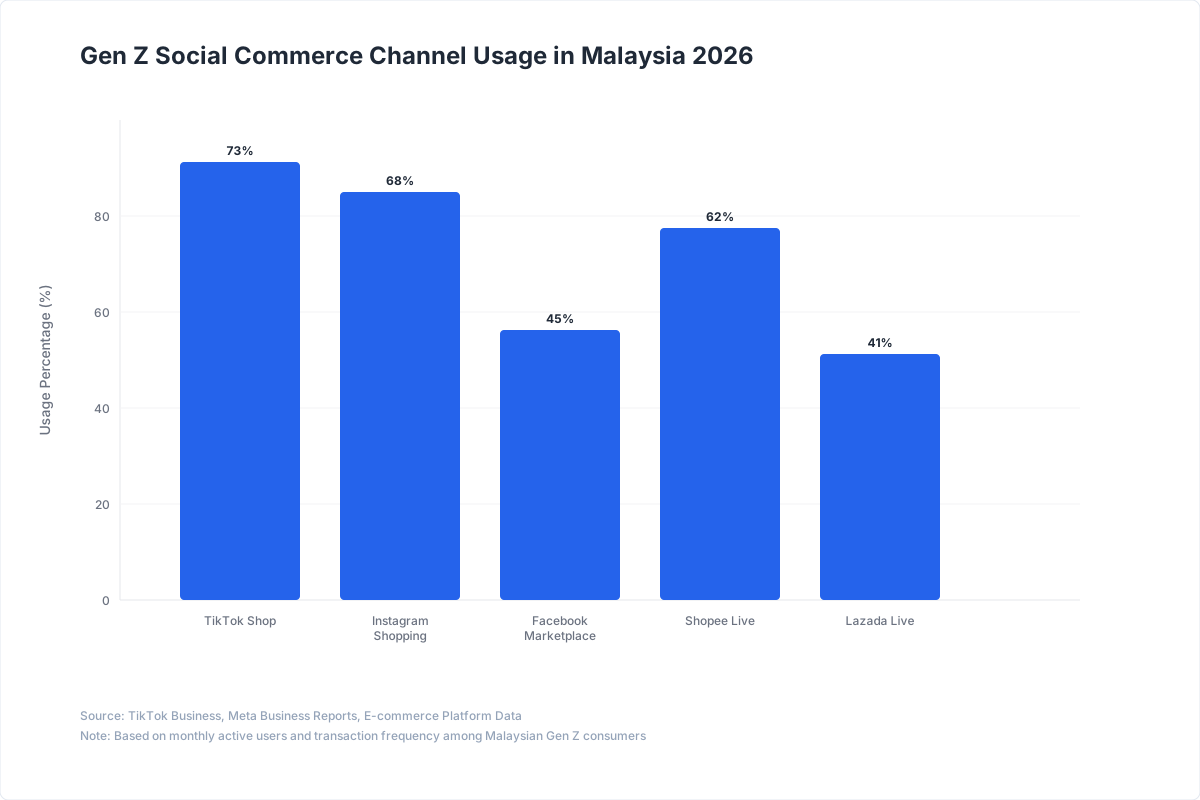
Malaysian Gen Z consumers are driving the TikTok Shop phenomenon that’s reshaping e-commerce. In 2025, TikTok Shop Malaysia reported 400% year-over-year growth, with Gen Z accounting for 73% of all transactions.
Case study: Local fashion brand Pomelo saw their Gen Z sales increase 560% after launching TikTok Shop integration, with average order values 23% higher than traditional e-commerce channels. Their secret? User-generated content campaigns that turned customers into brand ambassadors.
The Omnichannel Imperative
But social commerce is just one piece. Successful brands create seamless experiences across all channels. Gen Z consumers might discover your product on Instagram, research it on your website, try it in-store, and purchase via your app—all in the same day.
Malaysian retailer UNIQLO Malaysia exemplifies this approach. Their strategy includes:
- Instagram shopping tags for instant discovery
- AR try-on features in their mobile app
- Click-and-collect options at all physical stores
- Same-day delivery in major cities
Result: 45% of their Gen Z customers use multiple channels before purchasing.
Values-Driven Consumption: The Authenticity Algorithm
Here’s where many Malaysian businesses stumble. Gen Z consumers don’t just buy products—they buy into beliefs. Edelman’s Trust Barometer reveals that 73% of Gen Z consumers will pay more for sustainable products, and 81% expect brands to take stands on social issues.
This isn’t performative activism—it’s practical idealism. They research brands’ environmental practices, labor policies, and community involvement before making purchase decisions. Greenwashing gets called out instantly on social media.
Sustainability as a Business Model
Malaysian sustainable fashion brand Batik Boutique experienced this firsthand. When they transparently shared their supply chain, highlighted fair wage practices, and showed environmental impact reduction, their Gen Z customer base grew 280% in 18 months.
Their winning formula:
- Transparency: Detailed sourcing information for every product
- Impact metrics: Quantified environmental benefits of purchases
- Community involvement: Local artisan partnerships showcased on social media
- Circular economy: Clothing recycling and upcycling programs

The Authenticity Advantage
Authenticity isn’t a marketing tactic—it’s a business philosophy. Gen Z consumers can spot fake brand personas from miles away. They prefer brands that show vulnerability, admit mistakes, and demonstrate genuine commitment to their stated values.
Local coffee chain ZUS Coffee nailed this approach during their expansion. Instead of polished corporate content, they shared behind-the-scenes content of new store openings, introduced their baristas by name, and actively responded to customer feedback on social media. Gen Z customers now represent 52% of their customer base, with 67% higher retention rates than other demographics.
The Speed Economy: Meeting Gen Z’s Instant Gratification Expectations
Speed isn’t just about delivery—it’s about every touchpoint. Understanding gen z consumer behaviour malaysia 2026 means recognizing that this generation measures brand quality by response time, load speed, and resolution efficiency.
The expectations are brutal:
- Website loading: 3 seconds maximum, or they’re gone
- Customer service: Response within 30 minutes on social media
- Delivery: Same-day or next-day options preferred
- Returns: Instant refunds, no questions asked
The Technology Infrastructure Challenge
Malaysian businesses need serious tech upgrades to compete. Akamai’s research shows that every 100ms delay in mobile page load time decreases conversion rates by 7%. For Gen Z consumers, that number jumps to 12%.
Smart businesses are investing in:
- Progressive Web Apps (PWAs): App-like experiences without app downloads
- AI chatbots: Instant customer service across all channels
- Edge computing: Faster content delivery across Malaysia
- Predictive analytics: Anticipating customer needs before they express them
For insights on leveraging technology effectively, explore our analysis of retail innovation adapting to consumer trends in Malaysia.

Content Marketing Revolution: Speaking Gen Z’s Visual Language
Traditional content marketing is dead. Gen Z consumers consume content differently—they scan, skim, and skip. They want bite-sized information, visual storytelling, and interactive experiences.
The winning content formula:
- Short-form video: 15-30 second clips dominate attention
- Interactive content: Polls, quizzes, and AR filters drive engagement
- User-generated content: Peer creativity trumps professional production
- Meme culture: Humor and relatability build emotional connections
The Creator Economy Integration
Malaysian businesses are partnering with micro-influencers and content creators to reach Gen Z audiences authentically. Influencer Marketing Hub data shows that micro-influencers (1K-100K followers) generate 7x higher engagement rates with Gen Z compared to macro-influencers.
Local beauty brand Luxe Organics built their entire marketing strategy around creator partnerships. They work with 200+ Malaysian micro-influencers, providing free products in exchange for honest reviews and tutorials. Result: 340% increase in Gen Z brand awareness and 180% boost in direct-to-consumer sales.
Platform-Native Content Strategy
Each platform requires different content approaches:
- TikTok: Entertainment-first, trend-driven content
- Instagram: Aesthetic visuals with authentic captions
- YouTube Shorts: Educational content in quick formats
- Snapchat: Behind-the-scenes, raw content
Bottom line: One-size-fits-all content strategies fail with Gen Z. They expect platform-optimized experiences that feel native to each environment.
The Trust Economy: Building Loyalty in the Age of Infinite Choice
Brand loyalty looks different for Gen Z. They’re not loyal to brands—they’re loyal to experiences, values, and communities. Traditional loyalty programs based on points and discounts don’t resonate. They want exclusive access, early product releases, and genuine relationship-building.
Understanding gen z consumer behaviour malaysia 2026 means recognizing that trust is earned through consistency, transparency, and community building, not through advertising spend.
Community-Driven Loyalty
Successful Malaysian brands build communities, not customer bases. Gaming peripherals company Razer Malaysia created the “Razer Gold” ecosystem that combines gaming rewards, exclusive merchandise, and community events. Gen Z gamers don’t just buy products—they join a lifestyle.
Their community-building tactics:
- Discord servers: Real-time interaction with brand teams
- Exclusive product drops: Limited releases for community members
- User-generated content contests: Community creativity drives marketing
- Gaming tournaments: Offline events building online communities

The Subscription Economy Opportunity
Gen Z consumers prefer access over ownership. Subscription models appeal to their desire for convenience, discovery, and financial flexibility. Malaysian startups are capitalizing on this trend:
- Fashion subscriptions: Monthly styling services
- Food delivery passes: Unlimited delivery for fixed fees
- Digital content bundles: Music, gaming, and streaming packages
- Lifestyle boxes: Curated experiences delivered monthly
Practical Implementation: Your Gen Z Strategy Playbook
Here’s your step-by-step action plan to capture the gen z consumer behaviour malaysia 2026 opportunity:
Phase 1: Foundation Building (Months 1-3)
Technology Audit:
- Test your website speed on mobile devices
- Implement live chat or AI chatbot systems
- Optimize checkout process to 3 steps maximum
- Enable social media login options
Content Strategy Development:
- Create platform-specific content calendars
- Identify 5-10 micro-influencers in your niche
- Develop user-generated content campaigns
- Plan short-form video content production
Phase 2: Engagement Scaling (Months 4-6)
Community Building:
- Launch brand-specific social media groups
- Host virtual or hybrid events for customers
- Create exclusive access programs
- Implement customer feedback loops
Values Integration:
- Conduct supply chain transparency audit
- Develop sustainability initiatives
- Partner with local social causes
- Communicate impact metrics regularly
Phase 3: Optimization and Growth (Months 7-12)
Data-Driven Refinement:
- Analyze Gen Z customer journey data
- A/B test different content formats
- Optimize based on engagement metrics
- Expand successful initiatives
Omnichannel Integration:
- Connect online and offline experiences
- Implement click-and-collect options
- Create consistent brand experiences across channels
- Develop loyalty programs that span all touchpoints
For broader context on Malaysian market evolution, consider reading about Malaysia’s economic outlook and smart SME strategies.
Future-Proofing Your Business: Preparing for What’s Next
The trends shaping gen z consumer behaviour malaysia 2026 are just the beginning. Forward-thinking businesses are already preparing for the next wave of changes:
Emerging Technologies
Augmented Reality Shopping: Gen Z expects to “try before they buy” digitally. AR product visualization will become standard for fashion, furniture, and beauty products.
Voice Commerce: As smart speakers proliferate in Malaysian homes, voice-activated shopping will complement mobile-first strategies.
AI Personalization: Machine learning will enable hyper-personalized product recommendations and dynamic pricing strategies.
Behavioral Evolution
Gen Z preferences will continue evolving:
- Privacy-first mindset: Increased demand for data transparency and control
- Wellness integration: Mental health and physical wellness becoming purchase criteria
- Experience economy: Prioritizing memorable experiences over material possessions
- Circular consumption: Resale, rental, and sharing economy participation
Understanding cybersecurity implications becomes crucial as digital engagement deepens—explore our guide on small business cybersecurity best practices for comprehensive protection strategies.
The Competitive Landscape
Boston Consulting Group research predicts that businesses successfully adapting to Gen Z behaviors will capture 1.4x market share growth compared to those using traditional approaches. The time to act is now, before your competitors establish dominant positions.
Your Next Move: Turning Insights into Action
The RM50 billion opportunity in gen z consumer behaviour malaysia 2026 belongs to businesses that move fast and adapt continuously. This isn’t about abandoning your current customer base—it’s about expanding your reach to capture the most influential consumer generation in Malaysian history.
Start small, test quickly, and scale what works. Gen Z consumers appreciate brands that experiment, fail fast, and iterate based on feedback. They’d rather see authentic effort than perfect execution.
The businesses that will dominate the next decade are already building Gen Z-centric strategies today. Every month you wait is market share lost to competitors who understand that consumer behavior isn’t just changing—it’s been revolutionized.
Bottom line: The future of Malaysian commerce is being written by Gen Z consumers. Make sure your business has a starring role in that story.