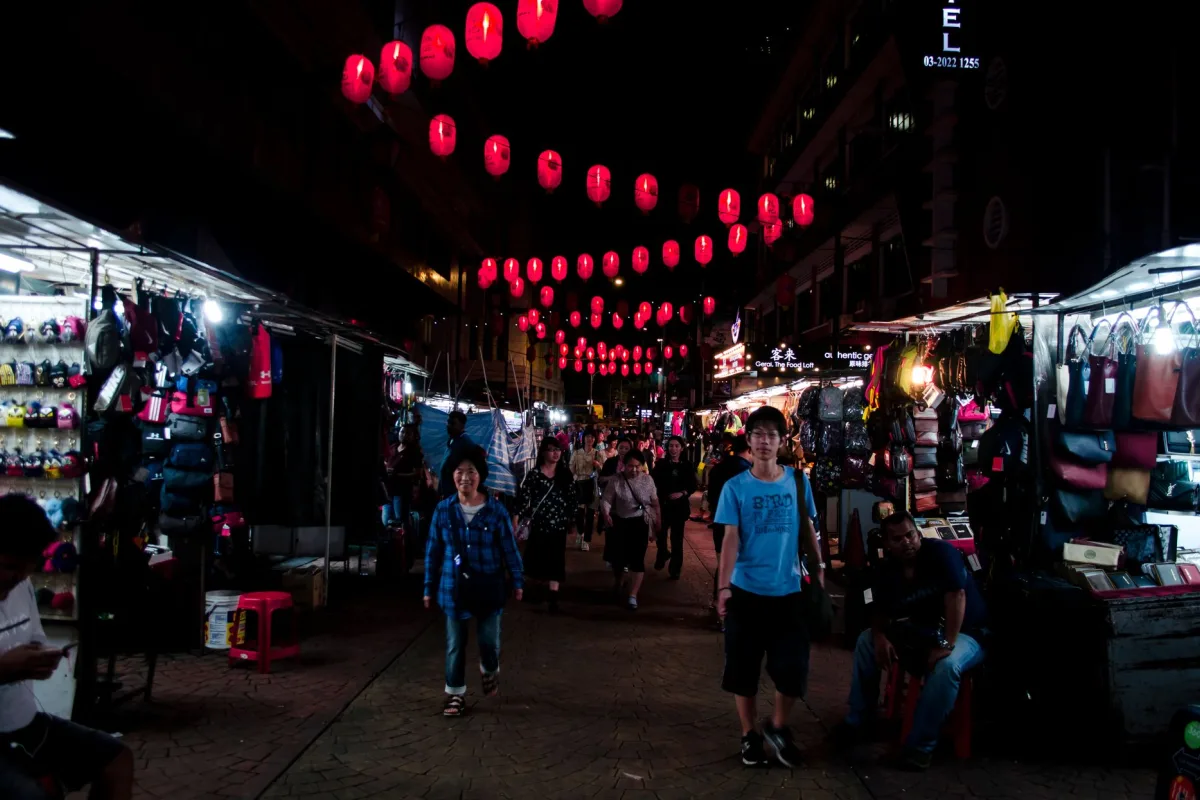
Visit Malaysia 2026: what it means for local businesses
For local businesses, Visit Malaysia 2026 means more foreign visitors spread across the year and across the states, and the gains go to the businesses that are easy to find, easy to pay and easy to talk to. The campaign brings promotion, events and attention; it does not guarantee any single shop, hotel or tour operator a better year.
This guide sets out what the campaign has promised, what the arrival numbers show so far, and the practical steps a small business can take to capture visitor spending without overcommitting.
What the campaign set out to do
Visit Malaysia 2026 is the national tourism campaign for the year, promoted by the Ministry of Tourism, Arts and Culture and Tourism Malaysia. Its targets are 47 million international visitors and RM329 billion in tourism receipts, the Tourism, Arts and Culture Minister, Tiong King Sing, told The Star in December 2025. Prime Minister Anwar Ibrahim gave the same figures when he tabled Budget 2026 in October 2025.
The government was still working to that target in June 2026, when the deputy minister, Chiew Choon Man, said the ministry was optimistic it could be met despite global uncertainty, Utusan Malaysia reported. The ministry’s first goals, set in March 2024, were 35.6 million tourist arrivals and RM147.1 billion in income, The Star reported, so older reports may quote those figures.
For scale, Malaysia received about 42 million visitors in 2025, The Star reported, so the target asks for roughly five million more in the campaign year. The minister also linked the campaign directly to small firms, saying rising arrivals would benefit small and medium enterprises, according to the same report.
What the first quarter showed
The early numbers are strong. International arrivals reached 10.64 million in the first quarter of 2026, the New Straits Times reported, citing the minister’s statement. That was 5.4% higher than a year earlier, according to the NST report.
The growth was uneven. China was the main growth driver, with arrivals up 25.2%, while visitors from the Middle East fell 27.2%. Arrivals from East Asia and ASEAN each rose by more than 200,000, according to the same report.
For a small business, the lesson is to look at who actually walks through your door, not at the national total. A café in Johor Bahru, a dive operator in Sabah and a batik shop in Kuala Terengganu will each see a different slice of these visitors, and each should plan for its own.
Where the campaign is pointing visitors
The campaign aims to spread its major events beyond the capital. “We cannot concentrate all the major events in Kuala Lumpur,” the minister told The Star in the same December 2025 report, adding that every state must play its part.
Promotion is also aimed at particular markets. Tourism Malaysia is focusing on high-spending markets including China, Singapore, ASEAN countries and Europe, The Star reported. Speaking about China, the minister said: “We are targeting second-tier cities and working with airlines to reduce transit times.” If you sit outside the usual tourist trail, this is the year to make sure visitors who do reach your state can find you.
Be easy to pay
A visitor who cannot pay the way they are used to may buy less, or walk next door. The simplest fix is already on many Malaysian counters: the DuitNow QR code.
Tourists using AlipayCN, other Alipay+ partner apps and Weixin Pay, known locally as WeChat Pay, can pay by scanning DuitNow QR with no extra app, PayNet said in a July 2025 press release. The same release said DuitNow QR was accepted at more than 2.5 million merchants in Malaysia.
- Display your DuitNow QR where visitors can see it before they decide, not only at the till.
- Ask your bank or payment provider which foreign wallets your QR accepts, and add a small sign saying so.
- Keep card payment available for visitors from markets where cards are still the habit.
- Show prices clearly in ringgit, so visitors can compare without asking.
Be easy to find and easy to talk to
Assume a visitor will look you up on their phone before walking in. Make sure your business shows up with the right address, opening hours and photos on the map and review platforms they use, and answer reviews in a calm, factual tone.
Chat matters too. When a visitor messages before booking a table, a tour or a room, a fast and clear reply often wins the booking, and our guide to WhatsApp Business for Malaysian SMEs covers the profile, quick replies and catalogue that make those chats convert. Save your common answers in the languages your visitors use, whether that is English, Mandarin or Bahasa Indonesia.
- Translate the menu or price list into the languages of your main visitor groups, with photos for the bestsellers.
- Train counter staff on a handful of phrases for directions, payment and returns.
- Package local products for travel: smaller sizes, sealed packs and clear ingredient labels.
Plug into the events calendar
Events concentrate visitors into specific weeks and places, which is where a small business can plan rather than hope. In January 2026 the ministry said it would launch an official tourism calendar by the end of that month, alongside a programme of more than 300 events built around celebrations such as Chinese New Year, Hari Raya Aidilfitri, Deepavali, Christmas, Tadau Kaamatan and Gawai Dayak, The Star reported.
- Check the official calendar and your state tourism body’s listings for events within reach of your business.
- For each relevant event, decide in advance on extra stock, extra staff hours and opening times.
- Offer something specific to the event, such as a set menu, a bundle or an early-morning tour, rather than a general discount.
- Ask event organisers and nearby hotels about listing or referral arrangements.
Peak weeks strain working capital: you pay for stock and wages before visitor spending arrives. Our guide to cash flow management for Malaysian SMEs covers how to forecast those weeks so a busy month does not leave you short.
Grow without overbuilding
A campaign year is a reason to sharpen the business, not necessarily to expand it. Targets move, source markets shift and a campaign ends, so favour costs you can switch off.
- Use part-time or seasonal staff for event peaks before committing to permanent hires.
- Order stock in smaller, more frequent batches around events, rather than one large bet.
- Avoid signing a long lease or loan on the strength of one year’s visitor numbers alone.
- Track which improvements bring repeat local customers too; those keep paying after the campaign.
The takeaway
Visit Malaysia 2026 widens the stream of visitors, but each business still has to catch its share. Before the next peak, work through this list:
- Find out which visitor groups actually reach your area, from your own sales and local tourism contacts.
- Display DuitNow QR prominently and confirm which foreign wallets it accepts.
- Check your map and review listings for the correct address, hours and photos.
- Prepare quick replies, menus and price lists in your visitors’ main languages.
- Mark the relevant events on your calendar and plan stock, staff and cash for each.
- Keep new costs flexible, so the business is stronger, not heavier, when the campaign year ends.
The improvements that serve a visitor well, such as clear prices, easy payment and quick answers, serve local customers just as well. That is the part of Visit Malaysia 2026 worth keeping.