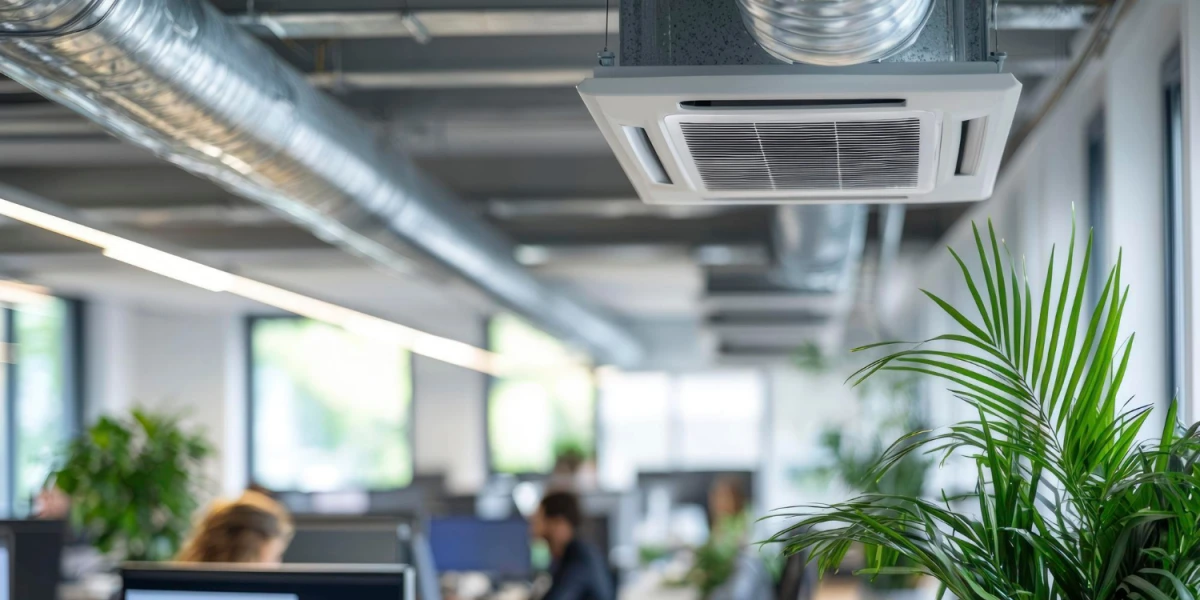
Air Conditioning Maintenance Malaysia: 7 Hidden Costs Every Business Owner Ignores
Table of Contents
Air conditioning maintenance Malaysia businesses neglect is silently draining thousands of ringgit from their bottom line every year. When cooling systems underperform, the losses extend far beyond energy waste — they compound into productivity drops, equipment failures, and compliance risks that most owners never connect back to their HVAC systems.
Research from Cornell University reveals that uncomfortable office temperatures can slash worker productivity by up to 150%. For Malaysian business owners navigating tight margins, understanding why air conditioning maintenance Malaysia workplaces require is no longer a facilities concern — it is a strategic imperative.
Why Air Conditioning Maintenance Malaysia Businesses Need Is Different
The tropical reality Malaysian enterprises face daily presents unique challenges. Year-round temperatures hovering between 27°C and 35°C, combined with humidity levels approaching 80%, mean air conditioning units operate under continuous stress. These conditions accelerate wear far faster than systems in temperate climates, making regular air conditioning maintenance Malaysia offices depend on absolutely critical.
A unit running 10-12 hours daily in Kuala Lumpur’s humidity accumulates dirt, mould, and condensation at roughly double the rate of a system in a cooler country. Clogged filters restrict airflow, forcing compressors to work harder. Dirty condenser coils reduce heat transfer efficiency. Low refrigerant levels strain the entire system. Without consistent air conditioning maintenance Malaysia’s climate demands, these problems compound month after month.
The 58% Problem: What Neglected Air Conditioning Maintenance Malaysia-Wide Actually Costs
According to guidelines from Suruhanjaya Tenaga, Malaysia’s Energy Commission, air conditioning systems account for approximately 58% of total electricity consumption in office buildings. This figure dwarfs every other electrical load — lighting, computers, and all other equipment combined.
The same government publication notes that properly maintained HVAC systems use 15-20% less energy than poorly maintained ones. For a medium-sized office spending RM3,000 monthly on electricity, skipping air conditioning maintenance Malaysia professionals recommend could mean RM350 to RM520 in unnecessary costs every single month.
Multiply this across multiple premises, and the financial impact becomes impossible to dismiss. An SME operating three office locations without proper air conditioning maintenance Malaysia standards require could be leaking RM12,000 to RM18,000 annually in pure energy waste — money that directly impacts your business’s financial health.
When Temperature Hurts Your Bottom Line More Than Electricity
The most compelling case for prioritising air conditioning maintenance Malaysia business owners can hear has less to do with energy savings and more to do with human performance.
A landmark study from Cornell University’s Human Factors and Ergonomics Laboratory found striking results. When researchers raised ambient temperature from 20°C to 25°C — bringing it into the comfort range — typing errors among participants fell by 44% while output increased by 150%.
At uncomfortable temperatures, workers keyboarded only 54% of the time with a 25% error rate. When conditions improved, they worked 100% of the time with errors dropping to 10%. Researchers estimated that maintaining comfortable temperatures yields approximately RM8.80 in productivity gains per worker per hour.
This completely transforms the air conditioning maintenance Malaysia conversation. Annual employee salary costs in Malaysian offices run around RM280 per square meter, while annual energy costs sit near RM18 per square meter. A mere 1% improvement in workforce productivity delivers greater financial returns than eliminating energy expenses entirely.
What Professional Air Conditioning Maintenance Malaysia Services Actually Include
Regular servicing goes considerably beyond the basic filter cleaning some business owners attempt themselves. Comprehensive air conditioning maintenance Malaysia aircond specialists provide typically includes inspecting and cleaning evaporator coils, checking refrigerant levels, examining electrical connections for safety hazards, cleaning condensate drains to prevent water damage, and testing overall system performance against manufacturer specifications.
For commercial spaces operating in Malaysia’s demanding climate, industry recommendations suggest servicing schedules based on environment type. High-traffic environments like restaurants and retail spaces need air conditioning maintenance Malaysia technicians recommend every 2 to 3 months. Standard office settings require servicing every 4 to 6 months. Dusty environments such as workshops or factories need attention every 3 months regardless of usage intensity.
The decision between handling maintenance internally versus engaging specialists comes down to thoroughness and accountability. Professional air conditioning maintenance Malaysia service providers bring diagnostic equipment, manufacturer-specific training, and warranties on their work. When systems fail during critical business hours — a scenario familiar to anyone who has experienced an afternoon breakdown during a client presentation — having an established relationship with reliable technicians proves invaluable.
Regulatory Changes Making Air Conditioning Maintenance Malaysia Businesses Cannot Ignore
Malaysian regulations have tightened significantly. The Energy Efficiency and Conservation Act 2024, which came into force in January 2025, signals a broader government push toward operational efficiency standards. Revised Minimum Energy Performance Standards for room air conditioners took effect in January 2026.
Businesses relying on aging, inefficient units now face compliance considerations alongside cost pressures. Regular air conditioning maintenance Malaysia regulations increasingly expect ensures your equipment operates within acceptable efficiency ranges, protecting you from potential penalties and costly forced upgrades.
This regulatory environment mirrors other areas where Malaysian businesses must stay compliant. Just as verifying business partners through SSM protects you from legal exposure, maintaining proper HVAC records demonstrates operational diligence.
Energy Efficiency as a Competitive Advantage
The International Energy Agency projects that global cooling demand will triple by 2050. Malaysian businesses that optimise their air conditioning maintenance Malaysia operations now position themselves ahead of rising electricity costs and tightening regulations.
The Energy Commission recommends maintaining indoor temperatures between 24°C and 26°C for optimal balance between comfort and efficiency — a range that aligns perfectly with the Cornell research findings on productivity. Simple thermostat adjustments combined with regular professional air conditioning maintenance Malaysia experts advise can achieve the government’s suggested 5% energy savings baseline while maintaining or improving workplace conditions.
Modern inverter systems, when supported by proper air conditioning maintenance Malaysia technicians provide, offer significant efficiency gains over older fixed-speed units. Even existing three-star rated systems can approach their rated performance when serviced regularly — the key is consistency rather than crisis response.
Making Air Conditioning Maintenance Malaysia Businesses Prioritise a Habit
The most successful Malaysian enterprises treat facilities management as an operational discipline rather than an emergency response function. This means scheduling preventive air conditioning maintenance Malaysia professionals can perform during less disruptive hours, establishing service relationships before urgent needs arise, and budgeting for cooling costs as a predictable line item.
For businesses operating across multiple locations in the Klang Valley and beyond, centralising facilities relationships simplifies coordination and often unlocks better service terms. Technicians familiar with your specific equipment and usage patterns can identify emerging issues before they escalate into system failures. This same principle of proactive maintenance applies to office equipment across your entire operation.
The returns on this proactive approach compound over time. Equipment lasts longer, emergency repair costs decrease, energy consumption stabilises at efficient levels, and employees work in conditions conducive to their best performance. In Malaysia’s competitive business environment, every margin matters — and proper air conditioning maintenance Malaysia businesses invest in delivers returns across every dimension of your operation.