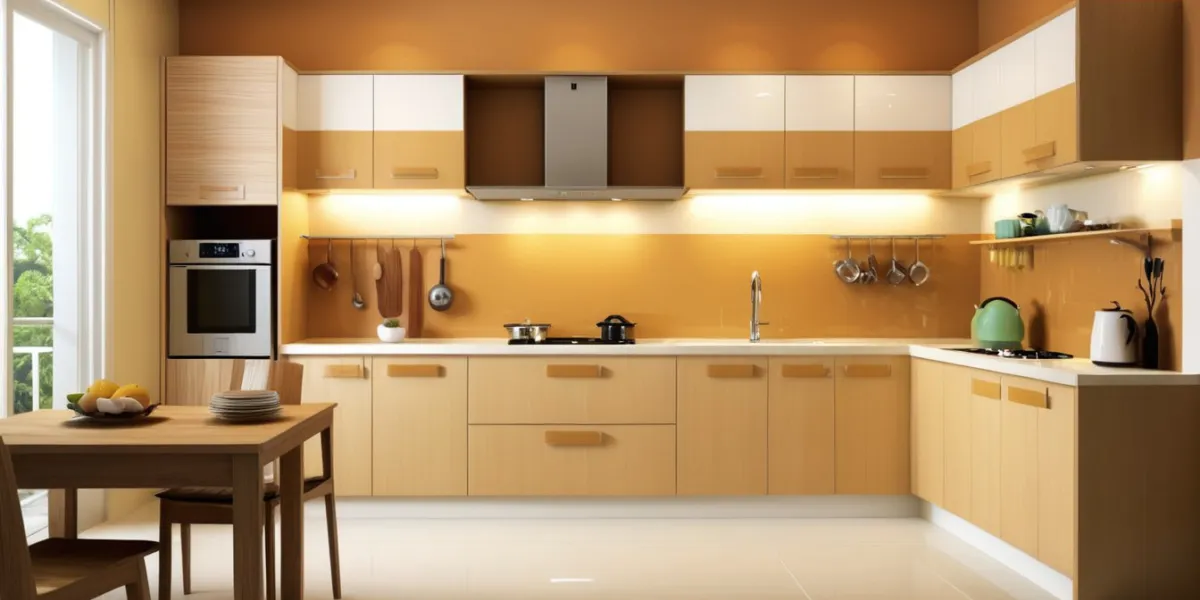
Kitchen Cabinet Design in Malaysia: Trends Built for Humid Homes
The kitchen cabinet trends worth following in Malaysia are the ones that survive heat, steam and humidity. The options in this guide pass that test: moisture-proof carcasses, warmer finishes than the all-white kitchen, handle-free fronts, lighting and appliances built into the joinery, and timber that can show where it came from. Kitchen cabinet design Malaysia-style has to start from two facts, the climate and the wet kitchen, and the better choices work with both.
This guide is for homeowners planning a renovation and for the cabinet makers and contractors who quote for them. It sets out the options, why they suit a Malaysian kitchen, and what to put in writing before work starts.
Two kitchens, two specifications
Many Malaysian homes split cooking between a wet kitchen for wok frying, boiling and washing, and a dry kitchen for light cooking, coffee and display. Treating them as one room with one specification is an easy way to waste money. The wet side needs materials that shrug off water and grease; the dry side is where you can spend on looks.
In practice, that means a hard-wearing carcass and a simple, easy-to-wipe door in the wet kitchen, and the island, the feature colour and the open shelves in the dry one. If your home has only one kitchen, specify it like a wet kitchen and add one or two dry-kitchen touches where they will be seen.
Materials chosen for humidity
The cabinet under the sink takes the most punishment. A slow leak, steam from a kettle and daily mopping get into any board that is not sealed on every edge, and particleboard that has swollen cannot be repaired, only replaced.
That is the case for an aluminium carcass or a waterproof board, at least for the sink and wet-kitchen runs. Aluminium does not absorb water and gives termites nothing to eat, though it can feel colder and sound hollower than timber. Good-quality plywood with proper edge banding remains a sound choice for dry areas, while particleboard is best kept away from water altogether.
Whatever you choose, ask for the carcass, door and worktop materials to be named separately on the quotation. “Cabinet, RM per foot” tells you nothing about what is inside the door.
Certified timber and cleaner boards
Sustainability in a kitchen is less about exotic materials and more about knowing what you are buying. If you are reading up on sustainable and eco-friendly types of wood materials for furniture, add one kitchen question to the list: will it cope with water? Bamboo and reclaimed timber can be beautiful on a dry-kitchen shelf and a poor choice under a sink.
For plywood and solid timber, the simplest check is certification. Malaysia’s own scheme is the Malaysian Timber Certification Scheme (MTCS), which is endorsed by the international PEFC system. In November 2025 the Dutch government confirmed that MTCS remains admitted under its timber procurement policy after a review by its Timber Procurement Assessment Committee, the Malaysian Timber Certification Council reported.
Ask your supplier whether the board carries an MTCS or PEFC chain-of-custody claim, and ask for that claim to appear on the invoice.
Indoor air is the other half of a cleaner kitchen. Some engineered boards are bonded with formaldehyde-based resins, so ask for the emission class on the manufacturer’s data sheet, and give a new kitchen a few days of ventilation before you fill the cabinets with food.
Colour beyond the all-white kitchen
All-white and all-grey monochromatic kitchens still have their fans, and a neutral kitchen is the safe choice if you plan to sell. The alternatives worth considering are warmer: woodgrain finishes, including woodgrain laminates on aluminium, deep greens or blues on base cabinets, and matte surfaces in place of high gloss.
If you want colour without regretting it in five years, put it on the base cabinets or the island and keep the tall units and wall cabinets neutral. Ask to see a full-size door sample under your own kitchen lighting, because a colour that looks rich in a showroom can look flat under a cool white tube.
Technology built into the joinery
The kitchen tech worth paying for is modest and practical. Soft-close hinges and drawer runners are worth insisting on, push-to-open fronts let you drop handles altogether, and LED strips under the wall cabinets light the worktop where a ceiling light leaves you working in your own shadow. Sockets built into the backsplash or a drawer keep phones and small appliances off the counter.
Built-in ovens, dishwashers and induction hobs turn a cabinet run into a heavy electrical load, so plan the circuits with a qualified electrician before the carpenter arrives. In Peninsular Malaysia, the electricity tariff restructuring that took effect from 1 July 2025 updated the time-of-use scheme with extended off-peak hours, Malay Mail reported.
Off-peak runs from 10pm to 2pm on weekdays and all day at weekends. TNB’s time-of-use tariff is optional and open to households with a smart meter, with applications from 1 July, a later Malay Mail explainer said. If you are choosing a dishwasher or oven, a delay-start timer is worth having, and TNB can tell you whether your meter qualifies.
Where the work is for cabinet makers
If you build or install kitchens for a living, the 2025 property figures make a case for renovation work as well as new homes. Developers launched 23,380 new residential units in the first half of 2025, according to Valuation and Property Services Department figures reported by The Star. The sales performance for those launches was 24.0%.
With launches moderating, which The Star’s report put down to cautious developer sentiment, replacing tired kitchens in existing homes looks like the steadier market. That favours makers who can survey an old kitchen, work around existing plumbing and finish within a family’s tolerance for living without a stove.
Workshop rules tightened too. The amended Occupational Safety and Health Act took effect on 1 June 2024 for workplaces nationwide, and companies with five or more employees must appoint an OSH coordinator, Human Resources Minister Steven Sim said, as reported by FMT. Employers must also analyse the risks in their workplace, which for a joinery shop means saws, dust and solvents; the Department of Occupational Safety and Health (DOSH) is the place to check what applies to you.
If the workshop is growing past a family operation, our guide to hiring your first employees in Malaysia covers the EPF, SOCSO, EIS and Employment Act duties that come with a payroll.
Before you sign a quotation
Before you shortlist makers of kitchen cabinet designs in Malaysia, decide your wet and dry zones and your budget ceiling, then get these points in writing from each one:
- Materials by part: carcass, doors, worktop and backsplash named separately, with brand or grade.
- Hardware: the hinge and drawer-runner brand, and whether soft-close is included on every unit.
- Wet zones: how the sink cabinet and the area around the hob are sealed or built differently.
- Certification and emissions: any MTCS or PEFC claim for timber, and the board’s formaldehyde emission class.
- Electrical work: who supplies and installs lighting, sockets and appliance points, and who signs off on them.
- Warranty and timeline: how long each part is covered, what voids the cover, and the agreed installation dates.
Two quotations with the same total can describe very different kitchens. The one that names every material and fitting is the one you can hold the maker to when the sink cabinet is tested by its first leak.