Rooftop Solar for Malaysian SMEs: Is It Worth It Under Solar ATAP?
Rooftop solar is worth it for a Malaysian SME that uses most of its electricity in daylight, owns or controls its roof and sizes the system to that daytime load. It is a weaker bet for a business that would export most of what it generates. The reason is the scheme that replaced net metering: under Solar ATAP, power a business sends to the grid is credited at a wholesale price and only against the energy part of its bill, while every unit it uses on site is a unit it does not have to buy from TNB.
Much of the solar advice Malaysian business owners read before 2026 was built around Net Energy Metering (NEM), whose last offer period ran until 30 June 2025, according to SEDA. The rules below are the ones that replaced it in Peninsular Malaysia. Sabah and Sarawak have their own utilities and are not covered by them.
What replaced NEM
The Energy Commission (Suruhanjaya Tenaga) issued the Guidelines for Solar Accelerated Transition Action Programme in Peninsular Malaysia on 30 December 2025, and they came into operation on 1 January 2026. SEDA Malaysia is the implementing agency. You apply through its online eATAP system, via a Registered PV Service Provider you appoint.
For a business, the rule that matters most is how exported power is valued. Households are credited at the energy charge for each unit they export, but non-domestic consumers are credited at the Average System Marginal Price (SMP), which the guidelines describe as reflecting “the actual avoided cost of electricity at the time of export”. Exports earn credit “based on the energy component only”, so they do not offset the network and other charges in your bill.
Two other points matter before you sign anything. A Solar ATAP contract runs for no more than ten years from the commencement date, after which the system may only be used for self-consumption. An existing NEM participant can switch, but only by ending the NEM contract, and the new contract runs for whatever was left of the old one.
How Solar ATAP treats a business
How big you can go
A non-domestic system’s inverter output may not exceed 100% of your maximum demand, measured as the average of the past 12 months’ recorded maximum demand, or your declared figure if you have less history. The guidelines cap any non-domestic installation at 1,000kW, and the distribution network’s own limits, set by a technical study, can bring that ceiling lower.
The ceiling is not a target. Maximum demand is based on your single busiest half-hour of the month, so on an ordinary afternoon your premises draw less than that, and a system built to the cap can produce more than you use.
What an exported unit earns
Under the guidelines, the Average SMP is the monthly average of the wholesale System Marginal Price between 7am and 7pm in the previous month. The Single Buyer must publish it by the 14th of each month, so the value of your exports moves with the wholesale market rather than staying fixed for the contract.
Credits expire every month
Exported energy can only offset electricity you import in the same billing period. Anything left over is forfeited, and so is any export above the Maximum Allowable Quantity (MAQ), which the guidelines set at your system’s kWac capacity multiplied by five sun hours and the days in the billing period. A negative bill is set to zero, with no cash paid out, and the credit cannot be used against the Automatic Fuel Adjustment (AFA).
Where the savings come from
Because exports earn a wholesale credit that expires monthly, the money in Solar ATAP is in self-consumption. Every unit your panels supply while you are using power is a unit you do not import, and under clause 13 of the guidelines imported energy carries the gazetted energy rate plus SST, the KWTBB levy and the AFA where they apply. An exported unit, by contrast, is credited only at the Average SMP.
The tariff itself was restructured from 1 July 2025. The Average Base Tariff Rate for the 2025 to 2027 regulatory period was set at 45.40 sen/kWh, The Star reported, and the rates your business pays depend on its tariff category and voltage level. Use the rates on your own TNB bill, not a national average, when you test a proposal.
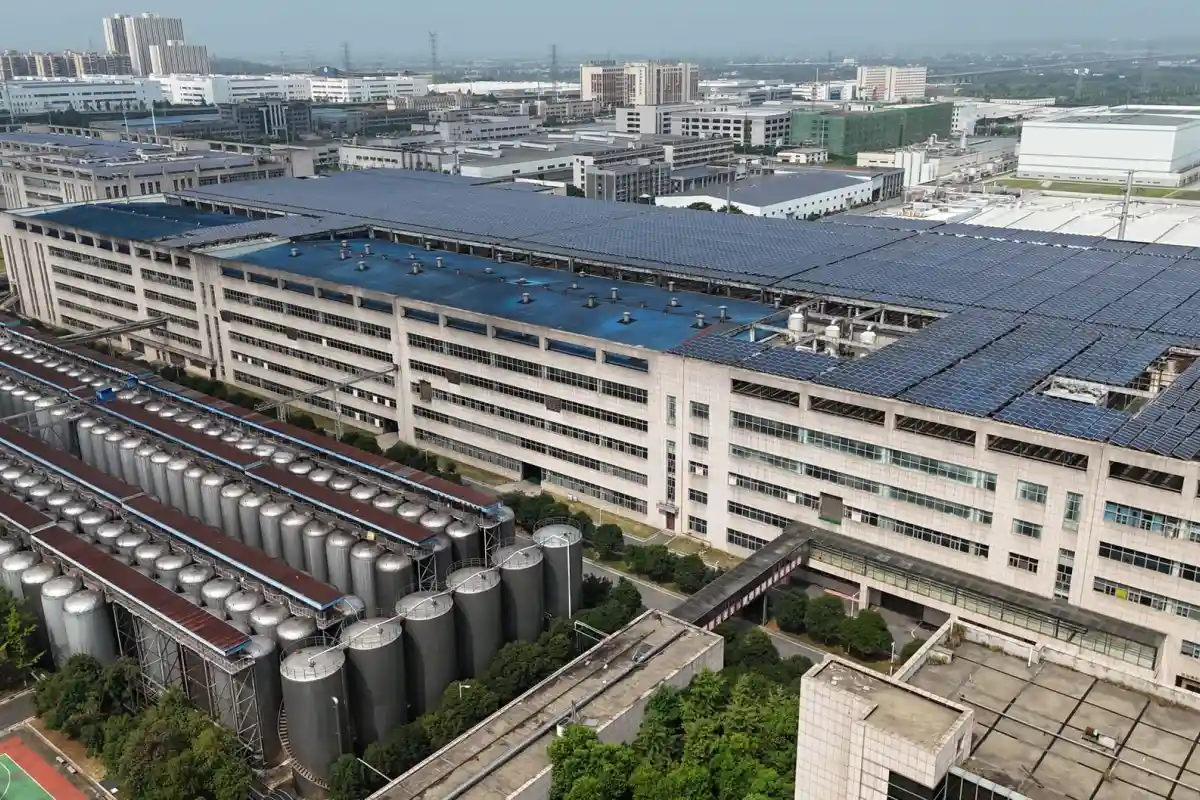
This is why the type of business matters more than the size of the roof. A factory running day shifts, a cold room, a clinic or an office running air-conditioning through the afternoon can absorb most of what a well-sized system produces. A shop that trades mostly at night, or premises that sit empty at weekends, will export more and keep less of the value.
The costs that are not panels
The scheme adds its own fees on top of the installer’s quote. Every application pays RM7.50 per kW, non-refundable whether you are approved or not. Systems above 72kW also need a Connection Assessment Study, paid for by the applicant, with the maximum fees below for low- and medium-voltage connections; a high-voltage connection needs a Power System Study instead, priced by the consultant.
| Installed capacity | Connection Assessment Study | Maximum study fee |
|---|---|---|
| Up to 72kW | Not required | None |
| Above 72kW to 180kW | Required | RM1,000 |
| Above 180kW to 425kW | Required | RM5,000 |
| Above 425kW to 1MW | Required | RM8,000 |
Source: Table 10.3, Solar ATAP guidelines, Energy Commission, December 2025.
If the study finds the local network needs upgrading to take your system, the guidelines put the cost of that work on the applicant. Get the study result before you fix the final size.
The timelines are fixed too. Under clause 15, SEDA must notify you of the result no later than two months after you submit, and once approved, the system has to begin operating within 18 months or the approval is cancelled.
Eligibility trips up some tenants: the panels must sit on a rooftop, carpark or covered walkway within the same premises, and multi-tenant consumers cannot apply. The guidelines define multi-tenant as several consumers in one premises, each with its own electricity supply, so a tenant with its own TNB account in a shared building is shut out. A tenant whose power runs through the landlord’s account is not a TNB consumer at all, and if you rent a whole building you will need the owner’s consent to use the roof.
Tax allowances and financing
A company that buys its own system may qualify for the Green Investment Tax Allowance (GITA) Asset for own consumption, which the Malaysian Green Technology and Climate Change Corporation (MGTC) verifies. Under MGTC’s GITA Asset guidelines, solar for own consumption sits in Tier 2: an allowance of 60% of qualifying capital expenditure, set against up to 70% of statutory income.
It covers spending incurred from 1 January 2024 to 31 December 2026, and the conditions narrow it further. The claimant must be a company incorporated under the Companies Act 2016, so a sole proprietorship does not qualify, and the asset must be new, owned by the company and listed in the MyHIJAU Directory. You apply after the system is commissioned and within 24 months of the spending, and no claim goes to LHDN before MGTC issues its verification letter.
Budget 2026 added a proposal worth asking about. The Budget speech proposed a 100% GITA Asset for own consumption for companies that use green technology products from the local supply chain certified under the MyHIJAU Mark. Ask your tax agent and MGTC how it applies before you choose a supplier.
On financing, the same Budget offered the Green Technology Financing Scheme (GTFS 5.0) with RM1 billion in financing value and government guarantees of up to 60% for energy projects. For the other loans and guarantees open to SMEs, see our guide to SME financing in Malaysia.
Is it worth it for you? A five-step test
Most of the answer is in your own bills.
- Pull 12 months of TNB bills. Note your monthly kWh, your recorded maximum demand and your tariff category. The average maximum demand sets your ceiling.
- Find your daytime load. Ask TNB or your electrician for your load profile, then size to what you reliably use between morning and late afternoon, weekends included.
- Ask for a self-consumption figure, not just a payback figure. A proper proposal shows how much of the output you will use on site, how much you will export, and what SMP it assumed for those exports. A payback that depends on heavy exporting deserves a second look.
- Check the roof and the paperwork. Confirm who owns the roof, whether it will last the ten-year contract, and whether you are a multi-tenant consumer. Ask the installer to confirm it is a Registered PV Service Provider.
- Settle the tax position before you sign. If you trade as a company, ask your tax agent whether the 60% GITA Asset allowance or the Budget 2026 MyHIJAU proposal applies.
If the numbers only work at the size the rules allow, the system is probably too big. Solar ATAP rewards the business that uses its own sunshine, and the safest proposal is the one you would still accept if every exported unit earned nothing.